Drone Training Curriculum for Universities (Beginner to Advanced Guide 2026)
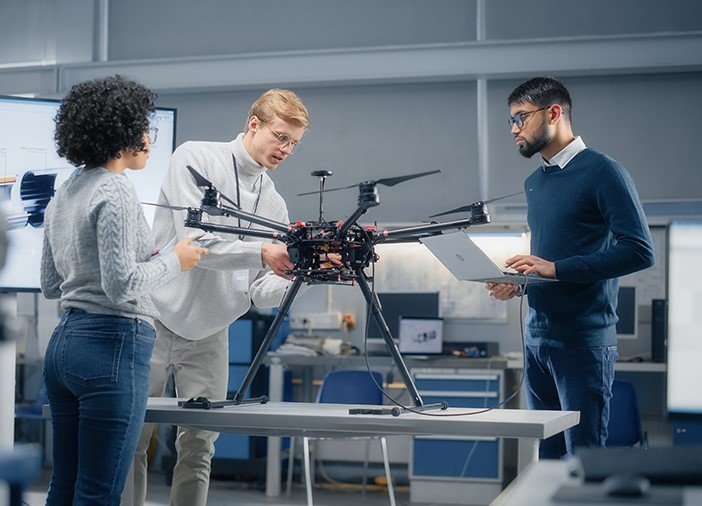
Drone technology is rapidly becoming a core skill across industries like agriculture, defense, infrastructure, and smart cities. Universities are now integrating drone training programs to prepare students for real-world careers.
But the biggest challenge is:
“What should be the proper drone training curriculum?”
A well-designed curriculum ensures:
- Step-by-step learning
- Practical skill development
- Industry readiness
In this guide, we explain a complete drone training curriculum for universities—from beginner to advanced level.
Why Universities Need a Structured Drone Curriculum
Without a proper curriculum:
Students only learn basic flying
No technical or industry exposure
No real career value
A structured program ensures:
✔ Hands-on learning
✔ Technical skill development
✔ Job-ready students
Complete Drone Training Curriculum Structure
A strong drone curriculum should be divided into 3 levels:
LEVEL 1: Beginner (Foundation Stage)
Objective:
Introduce students to drone basics and safe flying
Topics Covered:
- Introduction to drones (UAV basics)
- Types of drones
- Drone components (motors, ESC, flight controller)
- Basic aerodynamics
- Safety guidelines
Practical Training:
- Take-off & landing
- Basic flight control
- Indoor flying practice
- Simulator training
Example:
A first-year student learns how to:
- Control drone movement
- Understand parts of a drone
- Practice safely using simulators
Outcome: Confidence + basic understanding
LEVEL 2: Intermediate (Skill Development)
Objective:
Build technical and operational skills
Topics Covered:
- Drone assembly & configuration
- Sensors & GPS systems
- Flight modes (manual, GPS, altitude hold)
- Introduction to programming
- Data collection basics
Practical Training:
- Outdoor flying
- Mission planning
- Basic mapping
- Drone troubleshooting
Example:
Students can:
- Assemble a drone
- Plan a flight path
- Perform basic mapping
Outcome: Hands-on technical skills
LEVEL 3: Advanced (Industry & Research Level)
Objective:
Prepare students for real-world applications
Topics Covered:
- Industrial drone applications
- AI & automation in drones
- Drone data analytics
- Surveying & GIS mapping
- Regulations & compliance
Practical Training:
- Agriculture spraying simulation
- Land surveying projects
- Inspection missions
- Autonomous drone missions
Example:
Students work on:
- Crop monitoring using drones
- 3D mapping of land
- AI-based drone automation
Outcome: Industry-ready professionals
Ideal Curriculum Timeline
Total Program: 6–12 Months
Important Modules to Include
✔ Simulation Training
Reduces risk and improves confidence
✔ Hands-on Projects
Builds real-world experience
✔ Industry Case Studies
Connects learning with real applications
✔ Certification Programs
Adds career value
Real Example (University Implementation)
Engineering College Program:
Semester 1:
- Basics + simulator + beginner drones
Semester 2:
- Assembly + mapping + intermediate drones
Semester 3:
- Industrial applications + projects
Result:
- Students gain complete drone expertise
Future Benefits of Drone Training Curriculum
For Students:
✔ High-demand career opportunities
✔ Skills in AI, robotics, and automation
✔ Better placements
✔ Opportunity for startups
For Universities:
✔ Improved NAAC/NIRF rankings
✔ Industry collaborations
✔ Research funding
✔ Increased student admissions
Why This Curriculum is Best
This structure works because:
✔ Step-by-step learning (beginner → advanced)
✔ Focus on practical training
✔ Includes industry-level exposure
✔ Supports future technologies (AI, automation)
✔ Scalable for different institutionIt transforms students into job-ready professionals
Why Choose Hindsky Innovations?
Hindsky Innovations is Asia’s First End-to-End Drone Lab Setup Provider, offering complete training and lab solutions.
✔ What We Provide:
- Customized drone curriculum
- Complete lab setup
- Training & certification
- Industry-focused modules
- Long-term support
We help institutions build future-ready education systems
Start Your Drone Training Program (Recommended)
Every university has different goals.
Get a customized curriculum plan:
✔ Based on your course structure
✔ Based on student level
✔ Based on industry requirements
Talk to our experts for free consultation
Conclusion
A well-designed drone training curriculum is the backbone of a successful drone lab.
It ensures:
- Practical learning
- Industry readiness
- Future career growth
With the right structure and guidance, universities can create a powerful platform for innovation, skills, and global opportunities.
FAQs
1. What should a drone training curriculum include?
It should include basics, practical flying, technical skills, and industry applications.
2. How long should a drone training program be?
Typically between 6 to 12 months depending on the level.
3. Is programming included in drone training?
Yes, intermediate and advanced levels include coding and automation.
4. Can universities customize the curriculum?
Yes, it can be designed based on course requirements and student level.
5. Does drone training improve student placements?
Yes, it opens career opportunities in multiple high-growth industries.