Highlights
AI-generated text, images, and code
Faster content creation & automation
Scalable and customizable AI models
Improved productivity and efficiency
.jpg)
What is Generative AI?
Generative AI refers to advanced artificial intelligence systems capable of creating new content such as text, images, audio, video, and code.
These models are trained on large datasets and use deep learning techniques to generate human-like outputs, enabling businesses to automate creative and analytical tasks.
Our Trusted Clients







Problems
Challenges Without Generative AI
✔ Slow content production
✔ High manual workload
✔ Limited scalability
✔ Inconsistent quality
✔ Higher operational costs
✔ Marketing & content creation
✔ Software development
✔ Customer service automation
Solution
Our Generative AI Solutions
At Hindsky Innovations, we deliver custom generative AI solutions tailored to your business goals.
Our solutions help you:
✔ Automate content creation
✔ Improve creativity and efficiency
✔ Reduce time and operational costs
✔ Scale your AI capabilities
Comprehensive Generative AI Solutions
Real Results Delivered with Generative AI Solutions for Intelligent Content & Automation
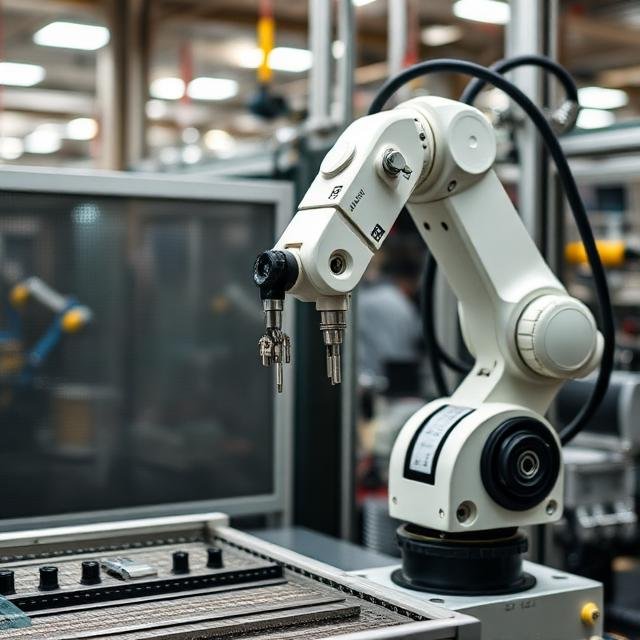
See how Hindsky Innovations transformed a drone manufacturing company.
hindinnovations.com
Rajasthan-Based Drone Manufacturing Company
Challenges
- ✔ Low Production Efficiency
- ✔ High Error Rate in Assembly
- ✔ Limited Scalability
Solution
Custom Robotics Automation by Hindsky Innovations
- ✔ Robotic Arm for Precision Assembly
- ✔ Automated Workflow Integration
- ✔ Training & Support
3X
Production Increase
50-60%
Error Reduction
Improved ROI
Our Implementation Process


Get Free Consultation for Generative AI
Frequently Asked Questions
Generative AI is a branch of Artificial Intelligence (AI) that creates original content such as text, images, videos, audio, software code, reports, and business insights by learning patterns from large datasets. Unlike traditional AI, which primarily analyzes data, Generative AI produces new content that supports innovation, automation, and intelligent decision-making. Enterprises are increasingly adopting Generative AI to improve productivity, streamline workflows, accelerate product development, and enhance customer experiences across industries.
Organizations use Generative AI for a wide range of applications, including:
- AI-powered content generation
- Enterprise chatbots and virtual assistants
- Document summarization
- Software code generation
- Marketing content creation
- Knowledge management
- Customer support automation
- Product design and innovation
- Research assistance
- Business process automation
These applications help organizations improve operational efficiency while reducing manual effort.
Generative AI is transforming industries such as manufacturing, education, healthcare, banking, finance, retail, logistics, telecommunications, government, defense, media, engineering, and research institutions. It supports intelligent automation, predictive decision-making, personalized customer experiences, digital transformation, and enterprise innovation across diverse business environments.
Large Language Models (LLMs) are advanced AI models trained on massive datasets to understand context, generate human-like responses, summarize information, answer questions, write code, and support intelligent conversations. They form the foundation of many Generative AI applications, enabling organizations to build AI assistants, enterprise knowledge systems, intelligent search solutions, and conversational automation platforms.
Artificial Intelligence (AI) is the broader field focused on enabling machines to perform intelligent tasks. Machine Learning (ML) is a subset of AI that allows systems to learn from data and improve predictions over time. Generative AI is an advanced branch of AI that goes beyond prediction by creating original content such as text, images, software code, audio, and designs. Together, these technologies enable organizations to automate processes, generate insights, and accelerate innovation.
Modern enterprises use Generative AI to automate repetitive tasks, accelerate software development, improve customer engagement, enhance knowledge management, generate business reports, optimize workflows, and support data-driven decision-making. When integrated with AI Infrastructure, AI Platforms, and enterprise applications, Generative AI becomes a strategic tool for improving productivity, innovation, and operational efficiency.
Yes. Universities, engineering colleges, innovation centers, and research institutions are increasingly establishing Generative AI Laboratories to support education, research, Natural Language Processing (NLP), Machine Learning, Computer Vision, robotics, software development, and interdisciplinary innovation. These laboratories provide students and researchers with practical experience in developing enterprise-grade AI applications while preparing them for emerging careers in artificial intelligence.
Before adopting Generative AI, organizations should evaluate their business objectives, data quality, computing infrastructure, security requirements, governance policies, regulatory compliance, scalability, AI model selection, integration with existing systems, and workforce readiness. A well-planned implementation strategy ensures responsible AI adoption while maximizing long-term business value. Enterprise deployments also require strong governance and security controls.
Within Industry 4.0, Generative AI works alongside Industrial Robotics, IoT, Digital Twins, Computer Vision, and Intelligent Automation to improve manufacturing, engineering design, predictive maintenance, quality inspection, supply chain optimization, and product innovation. As organizations continue investing in AI, success increasingly depends on integrating Generative AI into measurable business workflows rather than isolated experiments.
Hindsky Innovations provides end-to-end Generative AI solutions by combining Artificial Intelligence, Large Language Models (LLMs), AI Infrastructure, AI Platforms, high-performance computing, and advanced research ecosystems. The company supports universities, research organizations, government agencies, manufacturing industries, startups, and enterprises with customized AI laboratories, enterprise AI implementation, technology consulting, professional training, and innovation-driven solutions designed to accelerate digital transformation and future-ready business growth.