
Highlights
High-performance computing for AI workloads
Scalable and flexible infrastructure
Secure data storage & processing
Optimized for machine learning & deep learning
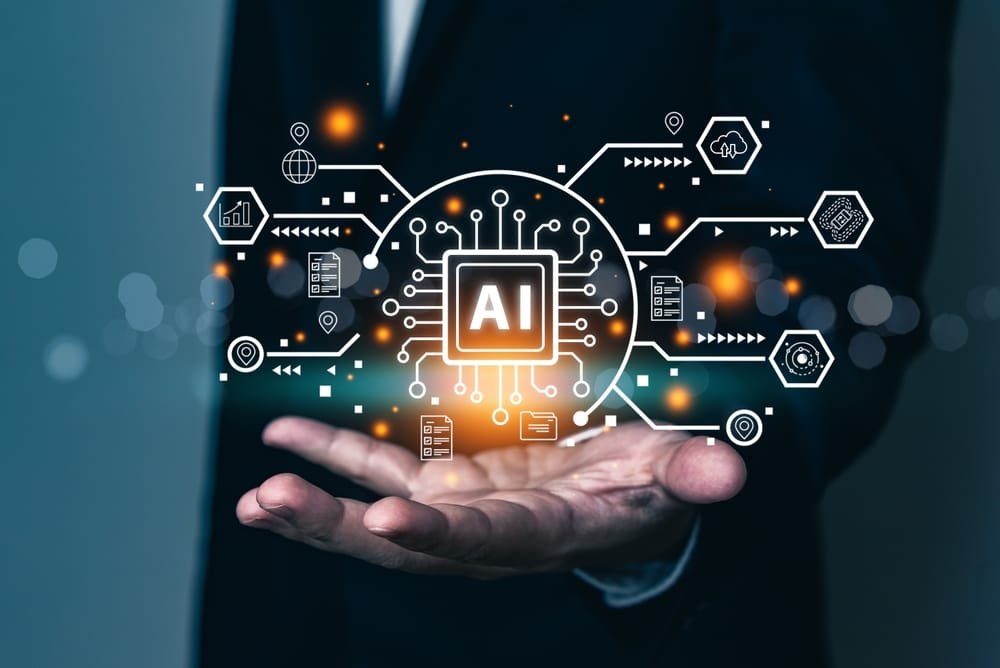
What is AI Infrastructure?
AI Infrastructure refers to the combination of hardware, software, and networking systems required to develop, train, deploy, and manage artificial intelligence applications.
It includes computing resources like GPUs, data storage systems, cloud platforms, and AI frameworks that work together to process large volumes of data and enable intelligent automation.
Our Trusted Clients







Problems
Challenges Without Proper AI Infrastructure
✔ Slow model training and performance
✔ Data handling inefficiencies
✔ Scalability issues
✔ Security risks
✔ High operational costs
✔Smart manufacturing
✔ Autonomous robotics & drones
✔ Predictive maintenance
✔ Healthcare AI systems
Solution
Our AI Infrastructure Solutions
At Hindsky Innovations, we design and deploy scalable AI infrastructure tailored to your business needs.
Our solutions help you:
✔ Accelerate AI development and deployment
✔ Optimize performance and scalability
✔ Ensure data security and reliability
✔ Reduce infrastructure costs
Comprehensive AI Infrastructure Solutions
Real Results Delivered with AI Infrastructure for Intelligent & Scalable Systems
See how Hindsky Innovations transformed a drone manufacturing company.
hindinnovations.com
Rajasthan-Based Drone Manufacturing Company
Challenges
- ✔ Low Production Efficiency
- ✔ High Error Rate in Assembly
- ✔ Limited Scalability
Solution
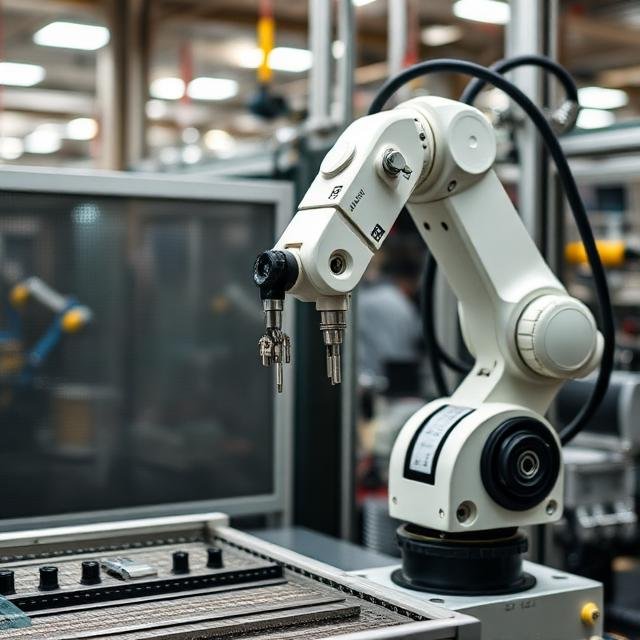
Custom Robotics Automation by Hindsky Innovations
- ✔ Robotic Arm for Precision Assembly
- ✔ Automated Workflow Integration
- ✔ Training & Support
3X
Production Increase
50-60%
Error Reduction
Improved ROI
Our Implementation Process


Get Free Consultation for AI Infrastructure
Frequently Asked Questions
AI Infrastructure refers to the hardware, software, networking, cloud, and data management systems required to develop, train, deploy, and scale Artificial Intelligence applications. It provides the foundation for machine learning, deep learning, generative AI, computer vision, analytics, and intelligent automation. Modern organizations rely on AI infrastructure to process large volumes of data, accelerate innovation, improve decision-making, and support digital transformation initiatives.
A complete AI infrastructure typically includes:
- GPU and high-performance computing servers
- AI workstations
- Data storage systems
- Cloud and hybrid cloud platforms
- High-speed networking
- AI development frameworks
- Data pipelines
- MLOps tools
- Security and access management
- Monitoring and orchestration systems
These components work together to support the complete AI lifecycle.
AI infrastructure is transforming manufacturing, healthcare, education, finance, retail, logistics, agriculture, energy, telecommunications, defense, smart cities, research institutions, and government organizations. It enables advanced analytics, predictive maintenance, automation, intelligent surveillance, recommendation systems, and AI-driven operational optimization.
Machine learning and deep learning workloads require significant computing power, large datasets, and scalable storage. AI infrastructure provides GPU acceleration, distributed computing, data management, and model deployment capabilities that reduce training time, improve performance, and support large-scale AI experimentation.
Traditional IT infrastructure is primarily designed for business applications, databases, and general computing workloads. AI infrastructure is optimized for data-intensive and compute-intensive tasks such as model training, real-time inference, computer vision, natural language processing, and generative AI. It typically includes GPUs, AI accelerators, high-speed storage, and specialized AI software stacks.
Yes. Universities, engineering colleges, research centers, and innovation hubs are increasingly establishing AI infrastructure to support AI education, research, generative AI development, robotics, computer vision, data science, and interdisciplinary innovation programs. Dedicated AI labs help students and researchers gain hands-on experience with enterprise-grade AI technologies.
In Industry 4.0 environments, AI infrastructure enables predictive maintenance, quality inspection, anomaly detection, digital twins, robotics, autonomous systems, production optimization, and real-time analytics. By integrating AI with IoT, automation, and manufacturing systems, organizations can improve efficiency, reduce downtime, and make data-driven decisions.
Organizations should evaluate computing requirements, data volume, scalability, cloud strategy, security, AI workloads, integration with existing systems, power and cooling requirements, compliance needs, operational costs, and future expansion plans. A well-designed AI infrastructure should support both current projects and long-term AI growth.
Generative AI applications such as large language models, AI assistants, image generation, and intelligent automation require substantial GPU resources, high-speed storage, and scalable computing environments. As organizations adopt generative AI, the need for robust AI infrastructure continues to grow across enterprise, education, research, and government sectors.
Hindsky Innovations delivers end-to-end AI infrastructure solutions by combining high-performance computing, AI platforms, data infrastructure, robotics, Industry 4.0 technologies, and advanced research ecosystems. The company supports educational institutions, research organizations, manufacturing industries, government agencies, and enterprises with customized AI labs, AI research infrastructure, technology integration, training programs, and future-ready innovation solutions.